
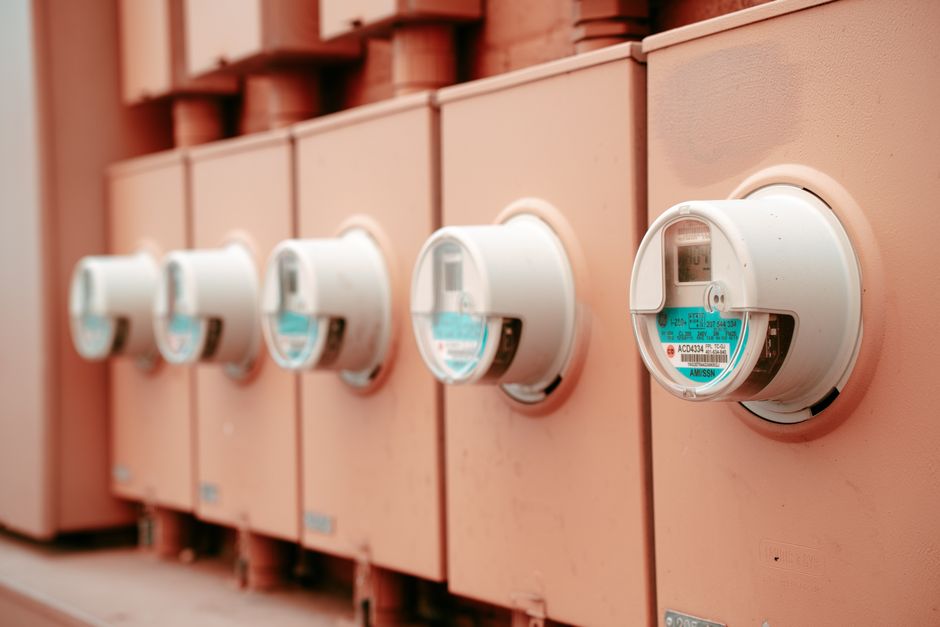
Once the panels are on the roof and the system’s running, a natural question is: how do I actually see any of this working? You can’t watch electrons. The answer is two separate things that together let you track both the money and the health of your solar system — the meter and the monitoring. They measure different things, they live in different places, and knowing what each one tells you means you’ll understand your power bill properly and spot a problem early.
The meter: tracking the money
Your electricity meter is the official record of power crossing the boundary between your house and the grid — and it’s what your bill is built from. New Zealand homes use net metering, which means the meter tracks two separate flows:
- Import — power you draw from the grid, charged at the full retail price (around 39c/kWh).
- Export — surplus solar you send to the grid, credited at your retailer’s lower buy-back rate (often around 8–17c/kWh).
The key thing the meter quietly teaches you is the gap between those two numbers. Because every imported unit costs you far more than an exported unit earns, the meter is a constant, real reminder that using your own solar is worth far more than selling it. Watch your import and export over a few months and the logic of self-consumption — running appliances in daylight, heating water with surplus — becomes obvious in dollars.
Do you need a special meter?
Most New Zealand homes already have a smart meter, which handles import and export measurement automatically. If yours doesn’t, or it’s an older type that can’t measure export properly, your retailer arranges an upgrade as part of connecting your solar — it’s a routine step, usually at little or no cost, and your installer and retailer coordinate it. You don’t need to source one yourself.
A note on net vs gross
You may hear the terms “net” and “gross” metering. In short, net metering — the New Zealand norm — only meters the net flow in each direction: you naturally use your own solar first, and only the leftover is metered as export. That’s the arrangement that makes self-consumption so valuable. There’s a separate guide that digs into the distinction if you want it.
The monitoring: tracking the health
The meter tells you about money; the monitoring tells you whether the system itself is working properly — and it’s genuinely one of the nicest parts of owning solar.
Modern inverters come with an app or web portal that shows what your system is generating, in real time and over history — today’s output, this month’s, this year’s, often broken down hour by hour. At first it’s simply satisfying to watch production climb on a sunny morning. But its real value is as an early-warning system.
Why monitoring matters more than it seems
Solar has almost no routine maintenance, so the monitoring app effectively is your maintenance. Here’s why that matters: a solar system can underperform silently. A panel gets shaded by a growing tree, dirt or bird mess builds up, or a fault develops — and none of it makes a noise or a visible change. The only sign is that generation quietly drops.
If you glance at the app now and then, you’ll notice an unexplained fall in output long before it shows up as a higher power bill — which might be months away. A clear, sunny day producing noticeably less than the equivalent day last year is your cue to investigate: clean the panels, trim the tree, or call the installer. Catching it early can be the difference between a five-minute fix and months of lost generation you never knew about.
What to look for
You don’t need to become an expert. Two simple habits cover it:
- Sense-check sunny days. On a bright day, is the system producing roughly what it usually does at that time of year? A big, unexplained shortfall is the signal.
- Check after any event. After a major storm, or if you’ve had electrical work done, a quick look confirms everything came back online.
The verdict
Two things let you see your solar working: the meter measures the money — the import you buy versus the export you sell, and the telling gap between them — while the monitoring app measures the health, whether the system is generating what it should. The meter sharpens your understanding of why self-consumption pays; the monitoring is the early warning that catches a shaded panel or a fault before it costs you. Glancing at the app occasionally is, genuinely, about the only “maintenance” a solar system asks of you.
Go deeper: Net vs gross metering in NZ · How to maintain your solar panels
Sources: Net metering, import/export and smart-meter arrangements per EECA and the Electricity Authority; buy-back and retail price ranges per the Electricity Authority and MBIE. Figures vary by retailer.