
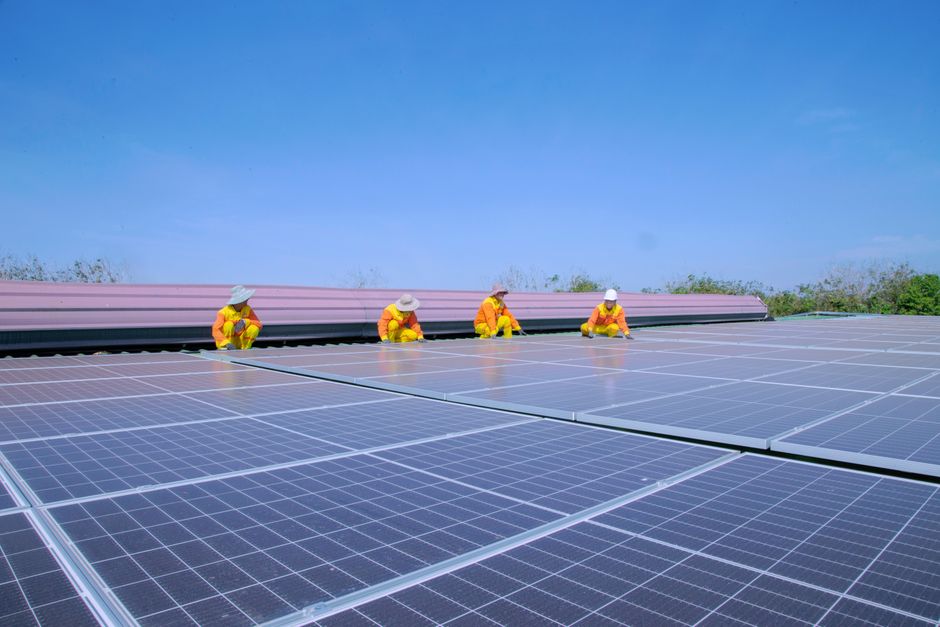
When you watch a solar install, the part that takes the most time and skill isn’t connecting the panels — it’s fixing them to the roof. The mounting (or racking) is the structural system that holds your array against 25 years of New Zealand wind and weather, and it’s where good workmanship genuinely earns its keep. This is the more detailed companion to the mounting basics: a closer look at the engineering, the roof-specific methods, and why it’s structural work rather than bolting on brackets.
It’s structural engineering, not brackets
The reason mounting matters so much is wind. New Zealand has serious high-wind zones, and wind doesn’t merely push against a panel array — as air flows over a roof it creates lift (suction), which tries to peel the array upward. A mounting system has to be designed to resist that uplift for the life of the system, which means the array, its fixings, and their spacing are calculated against the wind loadings for your specific site, to the relevant structural standards. This is why the number and placement of roof attachments isn’t arbitrary — it’s engineered. Under-specified mounting, with too few fixings or feet not properly tied into the structure, is what fails in a storm.
The components, and how they tie into the roof
A mounting system is a kit working together:
- Roof attachments (feet) that anchor into the actual roof structure — the rafters or purlins — so the load transfers into the building frame, not just the roof surface.
- Rails spanning the attachments to form a level framework.
- Clamps gripping the panel frames onto the rails.
- Flashings and seals making every roof penetration watertight.
The critical point is that the load path runs all the way into the building’s structure. Fixing to the cladding alone wouldn’t hold in a gale; the feet must reach the framing.
Roof type changes the method
There’s no single mounting approach, because the method depends entirely on the roof:
- Corrugated steel (the classic Kiwi roof): fixings into the purlins with sealing washers — the most common and straightforward case.
- Tile roofs: special tile hooks, or replacement tiles, so the structure carries the load without cracking tiles and the roof stays weathertight — more labour-intensive.
- Membrane or flat roofs: tilt frames to angle the panels, fixed and sealed (or ballasted) carefully to avoid puncturing the waterproof membrane.
A competent installer selects and specifies the right method for your roof type and wind zone — local experience really shows here.
Weathertightness — every fixing is a hole
The second job, alongside strength, is keeping water out. Every point where a fixing penetrates the roof is a potential leak, so flashings and seals must be done properly at each one. Done well, those penetrations stay dry for the system’s life; done carelessly, they’re slow leaks you may not notice until there’s damage in the ceiling below. On a 25-year asset, the sealing work is every bit as important as the structural fixing — and it’s another place a rushed, cheap install can store up trouble.
Where it fits in the install
Mounting is usually the first physical step of an install once the design and permits are sorted: scaffolding goes up, the attachments are fixed into the structure, the rails go on, then the panels are clamped down and wired. It’s the part that most determines whether your array stays put and stays dry — which is why it’s worth knowing your installer is doing it to standard, not racing through it.
The verdict
Mounting and racking is the structural backbone of a solar install: it’s engineered to resist New Zealand wind uplift, anchored into the roof’s actual framing, and weatherproofed at every penetration — with the method tailored to your roof type. It’s the part of the job where workmanship matters most, because poor mounting either leaks or lifts, and both are expensive. Good racking is invisible and lasts the life of the system, which is exactly why it’s worth choosing an installer on the quality of their structural work, not the lowest price.
Get a free assessment and we’ll make sure your array is mounted to last.
Sources: Wind-loading, structural fixing, and weathertightness requirements per New Zealand building standards and AS/NZS 5033; Standards NZ. Mounting should suit the specific roof and wind zone.