
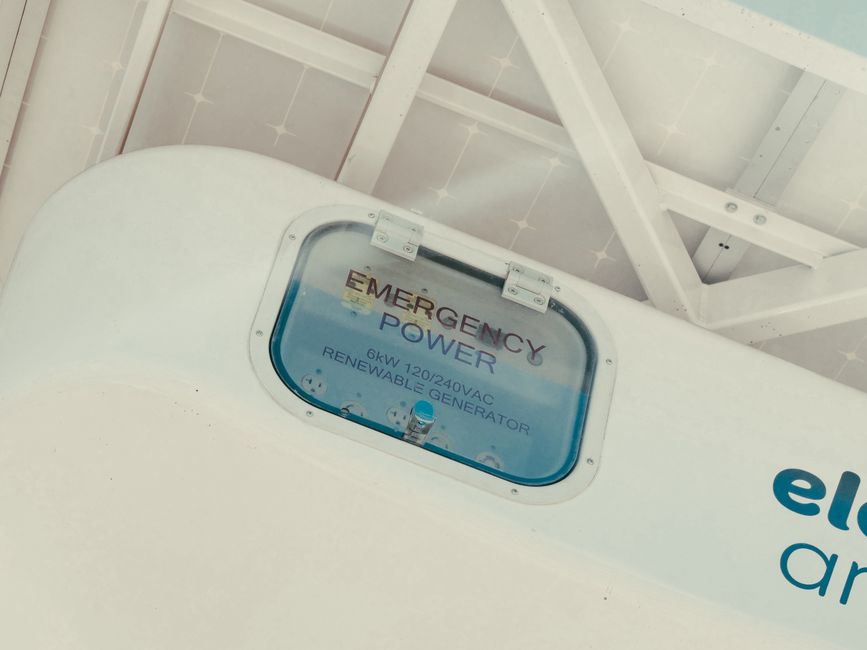
If your main goal is keeping the lights on during a power cut, you’ve got two very different options: a home battery or a backup generator. They both deliver backup power, but they go about it in almost opposite ways — and the right choice depends on what you actually want from it. Here’s an honest head-to-head, so you can match the solution to your priorities.
The backup generator: cheap, but manual and noisy
A petrol or diesel generator is the traditional outage solution, and its big advantage is upfront cost — a generator capable of running essentials is far cheaper to buy than a home battery. But that low price comes with real trade-offs:
- It only works when you start it. A portable generator needs you to be home, drag it out, fuel it, and start it when the power goes — not ideal at 2am in a storm. (Automatic standby generators exist but cost much more.)
- It needs fuel. You have to store petrol or diesel and keep it fresh, and during an extended outage you need to keep resupplying.
- It’s noisy and produces fumes. It has to run outside, away from windows, and it’s not pleasant to live next to.
- It does nothing the rest of the time. A generator sits idle 364 days a year, earning its keep only during the rare outage.
For occasional, short outages where you mainly want to keep the fridge and a few lights going, a generator is a cost-effective, if manual, answer.
The home battery: silent, automatic, and useful daily
A home battery (paired with solar) approaches backup completely differently:
- It’s automatic and instant. When the grid fails, a battery with backup capability switches over seamlessly — often so fast you barely notice — with no action from you. It just works, day or night.
- It’s silent and clean. No noise, no fumes, no fuel to store.
- It earns its keep every single day. This is the crucial difference: unlike a generator that sits idle, a battery works daily — storing your cheap daytime solar for use in the evening, lifting your self-consumption and trimming your bills all year round. The backup is almost a bonus on top of its everyday job.
- But it costs more upfront — substantially more than a generator — and its backup capacity is limited by its size (it’ll run essentials for hours, but a multi-day outage may exceed it).
So a battery is the premium option: more expensive, but effortless, clean, and genuinely useful every day rather than just in emergencies.
How to choose
It comes down to what you’re optimising for:
- Choose a generator if your priority is cheap insurance against occasional outages, you don’t mind the manual, noisy, fuel-dependent nature, and you want to spend as little as possible.
- Choose a battery if you want seamless, silent, automatic backup and you value the daily savings from storing your solar — and you’re willing to pay more for that combination. The battery only really makes financial sense alongside solar, where its everyday self-consumption role offsets much of the cost.
There’s also a middle path for off-grid and rural setups, where a battery handles the everyday and a generator provides the deep-winter or long-outage backstop — the two complementing each other rather than competing. (See off-grid backup generators.)
The verdict
For outage backup, a generator is cheaper upfront but manual, noisy, fuel-hungry, and idle except in emergencies; a home battery is silent, automatic, and — crucially — earns its keep every day by storing your solar, though it costs significantly more. If you just want bare-bones insurance for the odd power cut, a generator does it cheaply. If you want effortless backup plus daily savings and you’re pairing it with solar, a battery is the better long-term choice. Match the tool to whether you value lowest cost or everyday usefulness.
Get a free assessment and we’ll weigh battery backup against your needs and budget.
Sources: Battery and generator cost, automation, and backup characteristics per NZ industry references (2026). Figures vary by product and usage.