
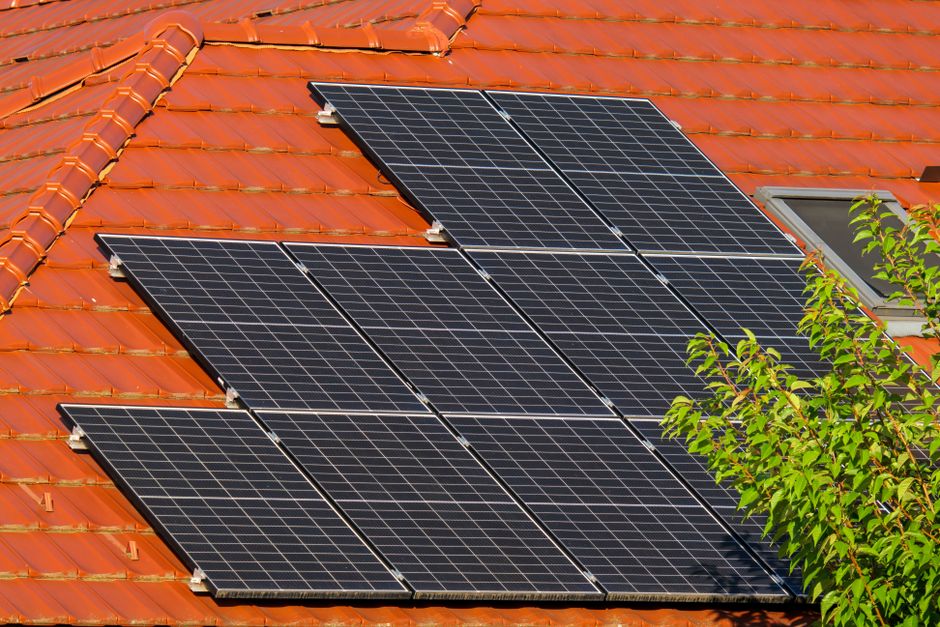
“How big a system should I get?” feels like it should have a simple answer — and the instinct most people have is wrong. The natural assumption is “as big as the roof will fit”, or “enough to cover my whole power bill”. But the right size for a New Zealand home is governed by a different principle entirely: size it to the power you’ll actually use while the sun is up, because self-consumed solar is worth far more than exported solar. Grasp that principle and the sizing falls out naturally. Here’s how to work out your number.
The quick guide
If you just want a ballpark, most New Zealand homes land in a fairly narrow band:
- Small home or modest bill: 3–4 kW
- Typical family home: 5–6.6 kW — the most common choice by far
- Large home, pool, or EV: 8–10 kW or more
For reference, a 6.6 kW system generates roughly 8,500–9,900 kWh a year across much of New Zealand — enough to make a real dent in a typical family’s annual usage. 6.6 kW is so common because it pairs neatly with a standard single-phase connection and a typical inverter, and offers good value per kW.
Why you size to daytime usage, not your whole bill
Here’s the key idea. Your panels generate during the day. The power you use at the same time as it’s generated saves you the full retail price (~39c/kWh). Any surplus you can’t use right then is exported for a fraction of that (~7–17c). So there’s little point sizing a system to cover your total annual bill if a big chunk of your usage happens after dark — the extra generation just floods out to the grid at the low rate while you still buy expensive power in the evening.
The size that maximises your return is the one that roughly matches your daytime load — the power your home draws while the sun’s up. That’s what solar can offset directly and valuably.
How to size it properly, step by step
- Estimate your daytime usage. Look at your power use during daylight hours — appliances, hot water, anything that runs while the sun’s up. (Your bill or smart-meter data can show the daytime share.) This is the load solar can directly offset.
- Match generation to that daytime load, not your total bill. You want a system whose typical output lines up with what you actually use in the day.
- Factor in your roof. The usable, well-oriented roof area sets an upper limit, and shade reduces what a given size will actually produce.
- Allow for the future. If an EV or a battery is on the horizon, both increase your daytime usage (an EV charged at midday, a battery soaking up surplus), so it can be worth sizing slightly ahead.
Don’t oversize for export
This is the most common sizing mistake, and it’s worth stating plainly. Without a battery, every unit you generate beyond your daytime use just exports at the low buy-back rate. A system far bigger than your daytime load doesn’t save you much more — it just sells cheap power to the grid.
If most of your usage is in the evening, the fix usually isn’t a bigger array. It’s one of two things: shift more usage into daylight (run appliances on timers, heat water with surplus), or add a battery to store the midday surplus for evening use. Both lift the value of a sensibly sized system far more than simply bolting on extra panels would.
The flip side: don’t undersize either
There’s a balance. Going too small leaves cheap roof space and good daytime sun unused — and because a lot of the install cost is fixed (labour, scaffolding, the inverter, paperwork), a slightly larger system is often only marginally more expensive per kW. So you’re aiming for the sweet spot: big enough to cover your daytime load well, not so big that you’re exporting most of it. A good installer sizes to this, not to the largest system they can sell.
The verdict
The right system size isn’t the biggest your roof can hold or the size that zeroes your bill — it’s the size that matches the power you’ll use during the day, because that’s the solar worth the most. For most New Zealand family homes that lands at 5–6.6 kW, but your number depends on your daytime usage, your roof, and whether an EV or battery is coming. Size to usage, resist over-sizing for export, and you’ll get the best return on the system.
Get a free assessment and we’ll size a system to your actual usage pattern.
Sources: Generation figures per NZ regional output data; EECA — solar for homes. Figures vary by region, roof, and home.