
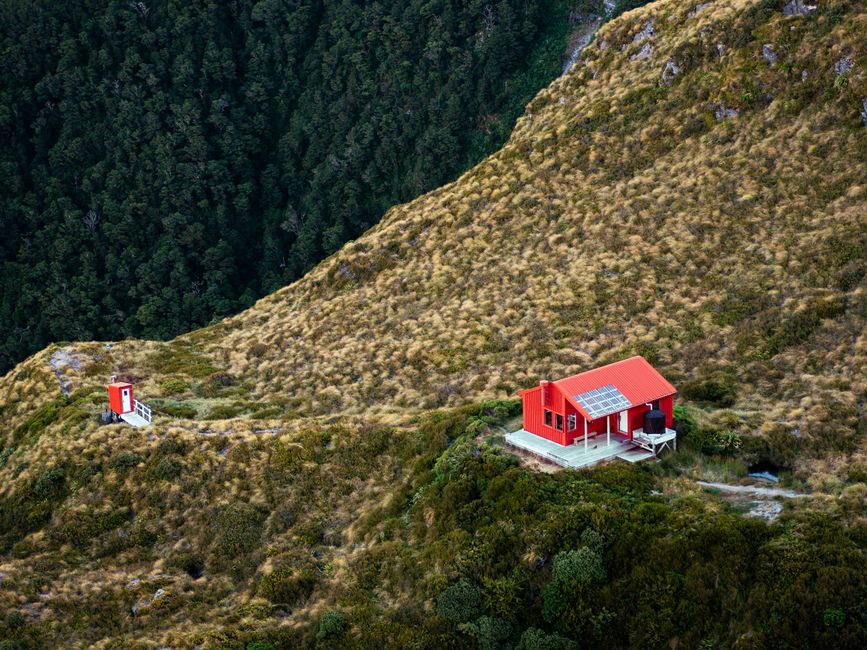
“Off-grid” has a certain romance to it — total energy independence, no power bill, a house running entirely on its own sunshine. And it’s real: an off-grid solar system genuinely disconnects you from the national grid and makes you your own little electricity utility. But that independence comes with a serious engineering reality, because there’s no grid to fall back on when the sun doesn’t shine. Understanding what off-grid actually involves — and who it genuinely suits — saves a lot of people from either dismissing it too quickly or, more dangerously, underestimating it. Here’s the plain-English version.
What “off-grid” really means
A normal home solar system is grid-tied: it works alongside the national grid, exporting surplus and drawing power when solar isn’t enough. The grid is an invisible, infinite backup and battery.
Off-grid removes that entirely. There’s no connection to the national grid at all. Your system must generate, store, and supply 100% of your electricity, every day of the year, with nothing to fall back on. If you run out, the lights go off — there’s no utility to top you up. That single difference changes everything about how the system is designed: it has to be built not for an average day, but for the worst stretch of the year.
The components — everything, but bigger
An off-grid system has the same basic ingredients as a grid-tied one, plus more, and all of it sized generously:
- Solar panels — usually a larger array than a comparable grid-tied home, because they have to charge your batteries and run the house, even on dull days.
- A large battery bank — the heart of the system. It carries the whole house overnight and through cloudy spells, so it’s far bigger than the optional battery on a grid-tied home.
- An off-grid (or “hybrid”) inverter — built to run a house entirely on stored and solar power, manage the battery, and coordinate the generator.
- A backup generator — nearly every New Zealand off-grid system has one, as the safety net for long winter cloudy spells when solar can’t keep the batteries full.
- A charge controller and system management — to protect the batteries and balance generation, storage, and load.
So off-grid isn’t just “solar without the grid connection” — it’s a bigger, more complex, more carefully balanced system, because it has no safety net but itself.
How it works day to day
In practice, an off-grid home runs like this: through the day the panels power the house and charge the battery bank; in the evening and overnight the house runs off the battery; and when a long cloudy spell threatens to drain the batteries faster than the sun can refill them, the backup generator kicks in to top them up. Done well, the generator runs rarely — but it’s there for the weeks when sun alone won’t cut it, typically deep winter.
The art of off-grid is balancing these so you almost never run short and almost never need the generator — which comes down to sizing, covered in its own guide.
Who off-grid is actually for
Here’s the crucial reality check: off-grid is rarely the right choice if you can connect to the grid affordably. Staying grid-tied is cheaper, simpler, and more reliable. Off-grid earns its place in one specific situation — when a grid connection is very expensive or impossible:
- A remote rural property, lifestyle block, or new build where the lines company’s connection quote runs into the tens of thousands (sometimes $40,000–$100,000+ to run a line in).
- A bach or cabin somewhere the grid simply doesn’t reach.
- A deliberate choice for full energy independence, accepting the higher cost and hands-on nature.
For these, off-grid isn’t an indulgence — it’s often the cheaper and only practical option. For a suburban home already connected to the grid, it almost never adds up.
The mindset shift
The biggest difference isn’t technical, it’s mental. A grid-tied home treats solar as a money-saver with the grid as backup. An off-grid home treats power as a resource it manages itself — sizing for the worst week of winter, keeping an eye on the battery state, and running big loads when the sun’s out. It’s more involved, and for the right property, genuinely rewarding.
The verdict
Off-grid solar means no grid connection at all: you generate, store, and manage all your own power, with a larger array, a big battery bank, and a backup generator standing in for the grid you don’t have. It’s the right call when connecting to the grid is prohibitively expensive or impossible — a remote block, a bach, a far-flung new build — and rarely worth it when an affordable grid connection is available. If that’s your situation, the next questions are what it costs and how to size it.
Get a free assessment and we’ll tell you honestly whether off-grid stacks up for your property.
Sources: Off-grid system design and component roles per NZ off-grid industry references (2026); grid-connection cost ranges per lines-company connection pricing. Figures vary widely by site.