
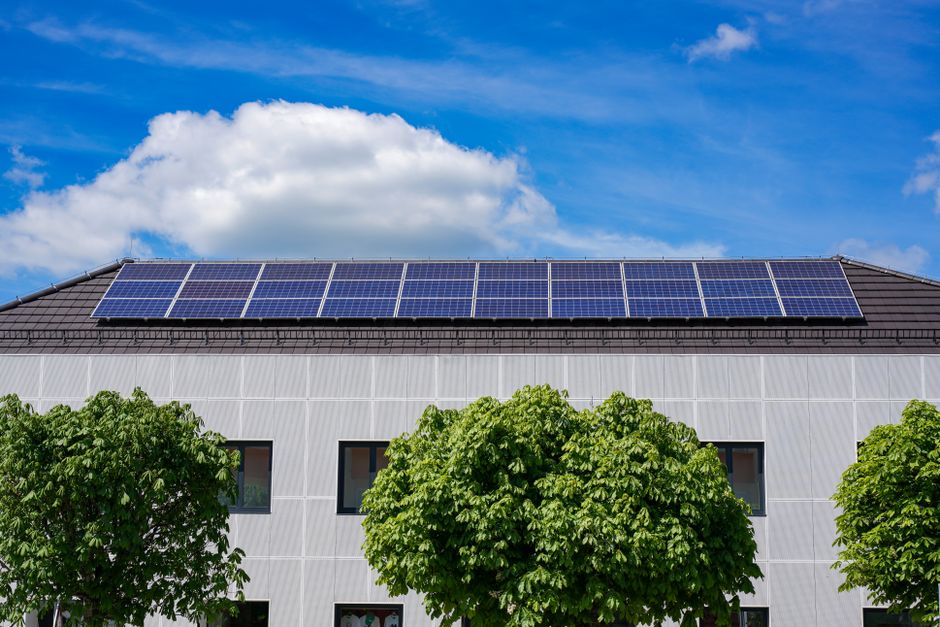
It’s one of the most common doubts about solar, and a completely reasonable one: New Zealand gets its share of grey, cold, drizzly days — so do solar panels actually do anything when it’s not blazing sunshine? The short answer is yes, and the longer answer clears up two persistent misunderstandings: panels still work on cloudy days, and cold weather actually helps rather than hurts. Here’s how weather really affects your solar.
Cloudy days: less, but not nothing
Solar panels generate from daylight, not just direct sun — so on an overcast day they keep producing, just at a reduced rate. Even under thick cloud, enough diffuse light reaches the panels to generate a meaningful fraction of their sunny-day output; under light or broken cloud, they can still produce quite well. You won’t get a clear day’s peak, but “cloudy” is a long way from “off”.
This matters because people picture solar as all-or-nothing — full sun or nothing. In reality it’s a sliding scale: bright sun is best, light cloud is still good, heavy cloud is reduced but real, and only darkness stops it entirely. Across a typical mixed New Zealand week, the cloudy days still contribute.
Cold weather: a help, not a hindrance
Here’s the one that surprises everyone. Solar panels are more efficient when they’re cool. Like most electronics, panels lose a little performance as they heat up — so a panel baking on a hot summer roof actually operates slightly below its rated efficiency, while the same panel on a cold, clear winter’s day can run above it. The cold itself is good for output.
So a crisp, clear, frosty morning can be excellent for generation. People conflate “cold” with “low output”, but the two aren’t the same thing — what reduces winter output isn’t the temperature, it’s something else entirely.
So why does output drop in winter?
If cold helps and clouds only reduce output, why do solar systems clearly generate less in winter? The real reason is shorter days and a lower sun. In winter:
- The days are shorter, so there are simply fewer daylight hours to generate in.
- The sun sits lower in the sky, so its light passes through more atmosphere and strikes the panels at a shallower angle, delivering less energy.
- There’s often more cloud in some regions and seasons.
It’s the quantity of daylight, not the cold, that drives the winter dip. This is also why the effect is bigger the further south you are, where the summer-to-winter day-length difference is largest.
What this means for you
A few practical points follow from how weather really works:
- Don’t write off solar because your area gets cloud or cold. Both are far less of a problem than the all-or-nothing intuition suggests — New Zealand’s overall solar resource is good despite the weather.
- Expect seasonal variation, and plan for it. Your system will generate abundantly in summer and less in winter. If your usage is winter-heavy (electric heating), be aware that’s when generation is lowest, which can strengthen the case for a battery or for managing your usage.
- Year-round, it averages out well. Output is quoted as an annual figure precisely because the strong summer months and the leaner winter ones combine into a solid yearly total.
The verdict
Yes — solar panels work in cloudy and cold weather. Clouds reduce output but don’t stop it (panels run on daylight, not just direct sun), and cold actually makes panels slightly more efficient. The reason output falls in winter is the shorter days and lower sun, not the temperature. So neither cloud nor cold is a reason to dismiss solar in New Zealand; just expect more generation in summer and less in winter, and size and plan with that seasonal rhythm in mind.
Get a free assessment and we’ll estimate your year-round output, season by season.
Sources: Panel performance in cloud and cold, and the role of day length and sun angle, per manufacturer data and NIWA solar resource information. Figures vary by location and season.